
Nunca vi meu pai sem bigode I Never Saw My Father Without a Mustache
2016-2019, Vídeo objeto Video-object, performance
TV 40’’, prisma de vidro para holograma, móvel de madeira
40’’ TV, hologram glass prism, wooden furniture
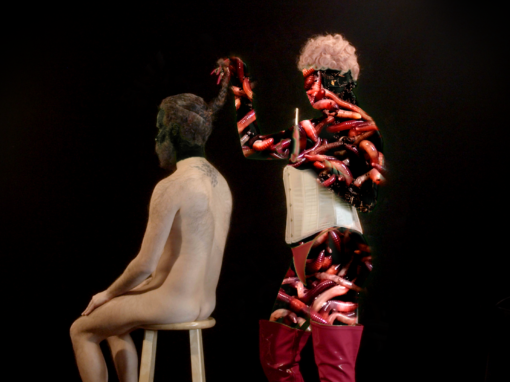
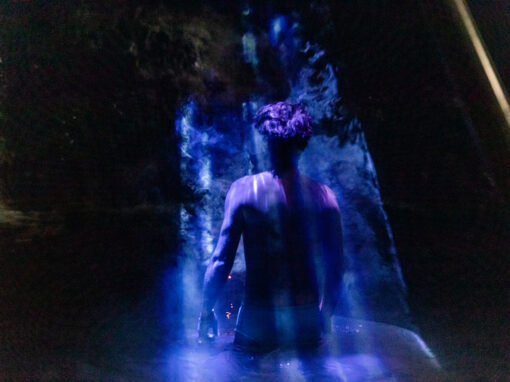
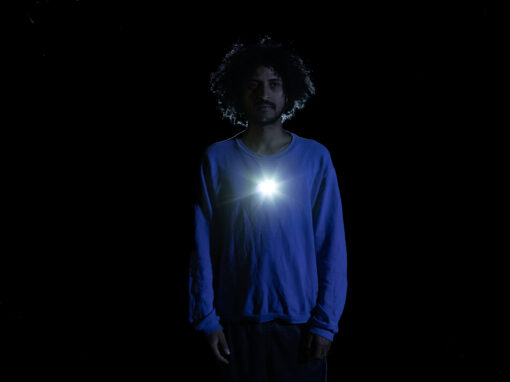
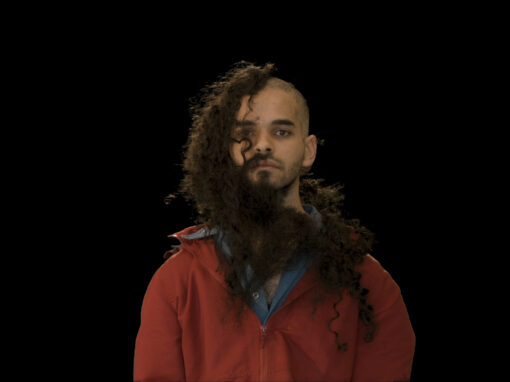
A performance surgiu da ideia básica de ritualizar um momento de mudanças intensas transformando o rosto a partir da raspagens dos cabelos, barba e sobrancelhas. Gravado em estúdio verde, o fundo, a máquina e o cabelereiro foram removidos para que os cabelos caíssem influenciados por forças invisíveis. O vídeo é uma das cenas do curta-metragem “O vídeo de 6 faces”, no qual é truncado com a paisagem do cerrado e, na versão “vídeo-objeto”, o fundo é mantido preto para facilitar o efeito holográfico resultado da combinação de uma TV e um prisma de vidro.
The performance derived from the basic idea of ritualizing a moment of intense changes by transforming the face based on the action of shaving hair, beard and eyebrows. Recorded in a green studio, the background, the machine and the hairdresser were removed so that the hair would fall influenced by invisible forces. The video is one of the scenes in the short film “The 6-Sided Video”, in which it is truncated with the cerrado landscape., In the “video-object” version, the background is kept black to enable the holographic effect resulting from the combination of a TV and a glass prism.







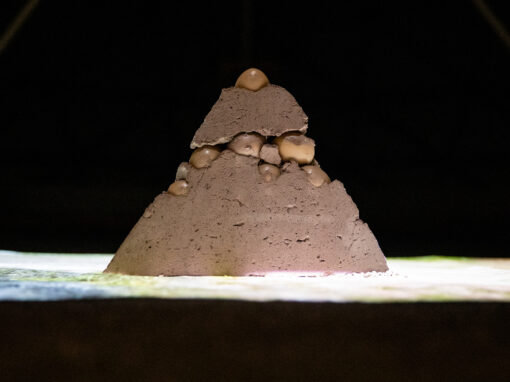
![TERRA[CAP]](https://www.mauriciochades.com/wp-content/uploads/2020/07/PirâmideUrubuJanineMoraes65-510x382.jpg)




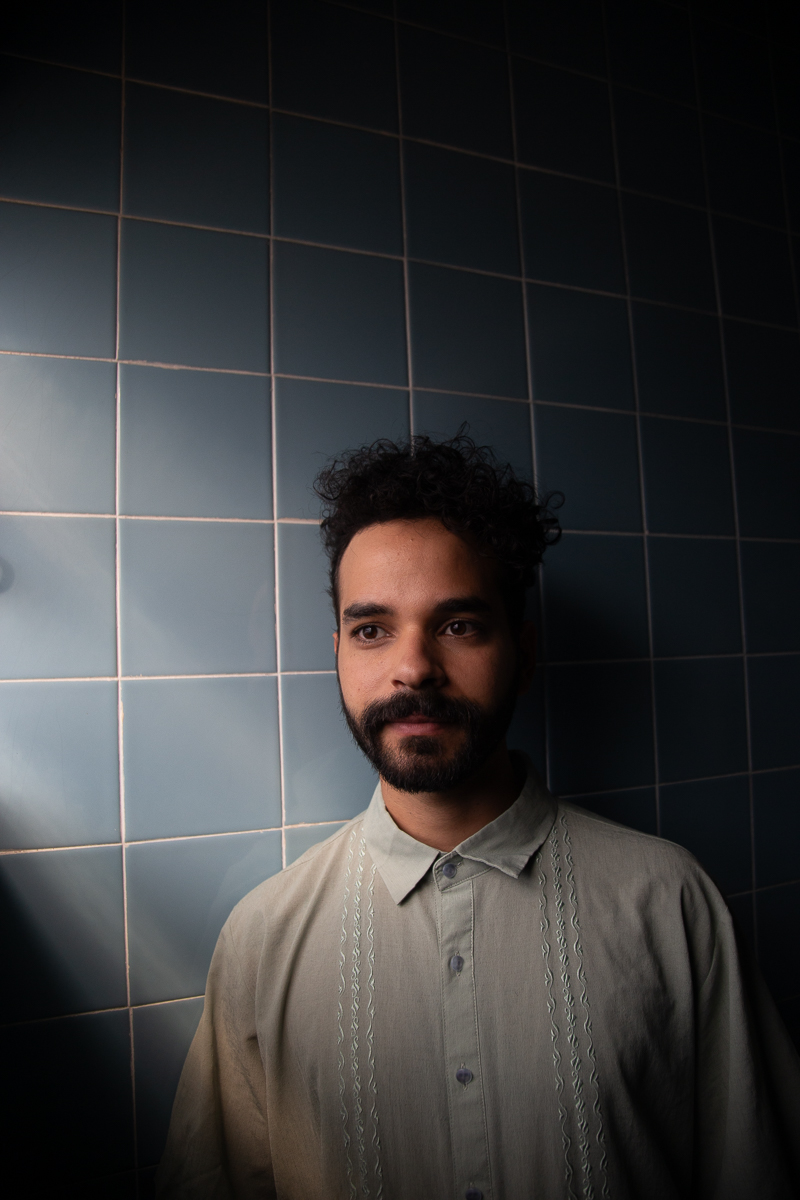
Maurício Chades (Gilbués-PI, 1991) é artista visual e cineasta, com uma prática que transita entre cinema, instalação, escultura e performance. Seu trabalho se desenvolve a partir de relações situadas com diferentes territórios no Brasil, particularmente no Cerrado e na Mata Atlântica, e, mais recentemente, estende-se aos Estados Unidos e ao Canadá. Por meio de ecologias queer, imaginários anticoloniais e formas multiespécies de parentesco, Chades investiga a decomposição, a regeneração e as fronteiras permeáveis entre o humano e o mais-que-humano. Seus projetos frequentemente partem de imersões territoriais prolongadas, colocando em diálogo conhecimentos situados, fabulação crítica e pesquisa ecológica.
Chades é mestre em Arte e Tecnologia pela Universidade de Brasília e possui MFA pela School of the Art Institute of Chicago. Sua produção tem sido exibida internacionalmente em instituições, mostras e festivais como a Bienal Sesc_Videobrasil, o Queer Lisboa e o FILE (Festival Internacional de Linguagem Eletrônica). Sua exposição individual Pirâmide, Urubu (2019) recebeu o Frankenthaler Climate Art Award em 2022, enquanto seus filmes foram reconhecidos pelo e-flux Film Award, pelo Olhar de Cinema e pelo Festival Internacional de Curtas do Rio de Janeiro. Indicado ao Prêmio PIPA em 2024, Chades está atualmente em pós-produção de seu primeiro longa-metragem, COGUM, um eco-horror que explora a decomposição e o luto interrompido como estruturas para repensar o trabalho, a ancestralidade e as relações humanas com a terra.
Maurício Chades (b. 1991, Gilbués, Piauí, Brazil) is a visual artist and filmmaker working across cinema, installation, sculpture, and performance. His work develops through situated engagements with territories in Brazil, particularly in the Cerrado and Atlantic Forest, and extends into the United States and Canada. Through queer ecologies, anticolonial imaginaries, and multispecies forms of kinship, Chades explores decomposition, regeneration, and the permeable boundaries between human and more-than-human life. His projects often emerge from prolonged territorial immersions, bringing situated knowledge, critical fabulation, and ecological research into dialogue.
Chades holds an MFA from the School of the Art Institute of Chicago and an MA in Art and Technology from the University of Brasília. His work has been exhibited internationally at venues and festivals including the Sesc_Videobrasil Biennial, Queer Lisboa, and FILE (Electronic Language International Festival). His solo exhibition Pirâmide, Urubu (2019) received the Frankenthaler Climate Art Award in 2022, while his films have received recognition from the e-flux Film Award, Curitiba International Film Festival, and Rio de Janeiro International Short Film Festival. A 2024 Pipa Prize nominee, he is currently in post-production on his debut feature film, COGUM, an eco-horror exploring decomposition and interrupted grief as frameworks for reimagining labor, ancestry, and human relationships with the land.