
Buraco Branco White Hole
2016, Videoinstalação Video installation
Carvão triturado, cova, grama, lona, pirâmide de ferro, projeção mapeada
Crushed charcoal, grave, grass, canvas, iron pyramid, mapped projection
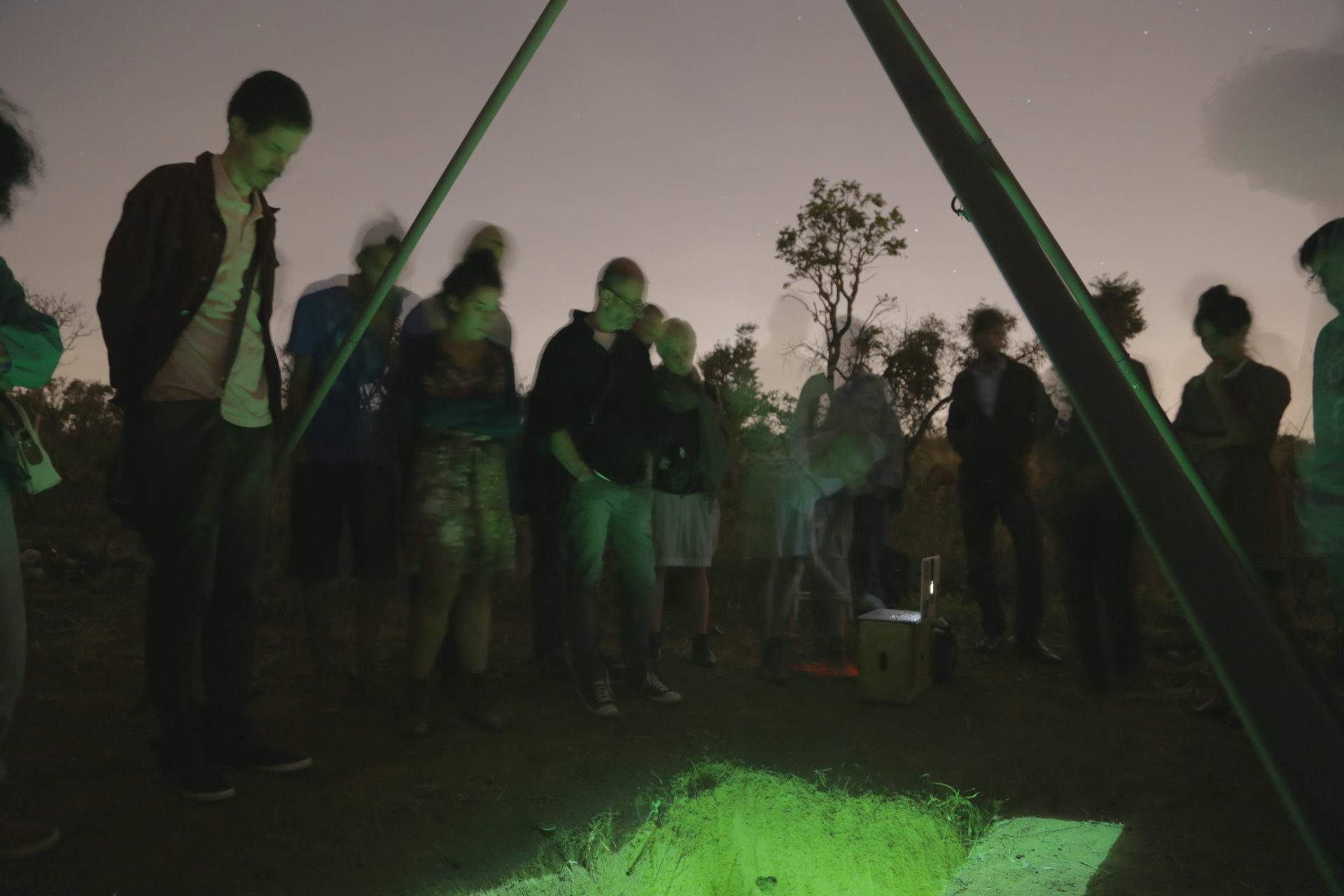
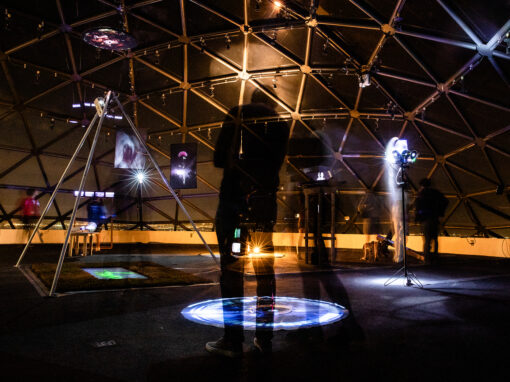
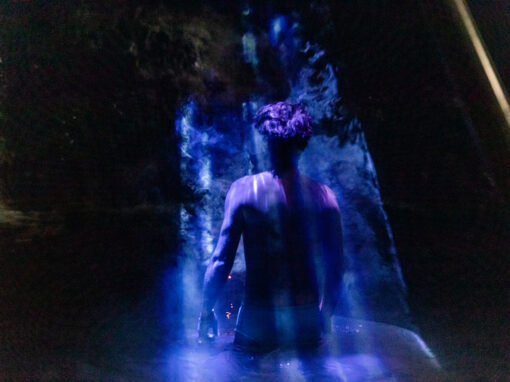
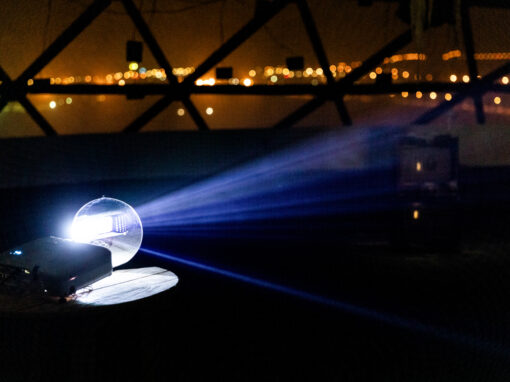
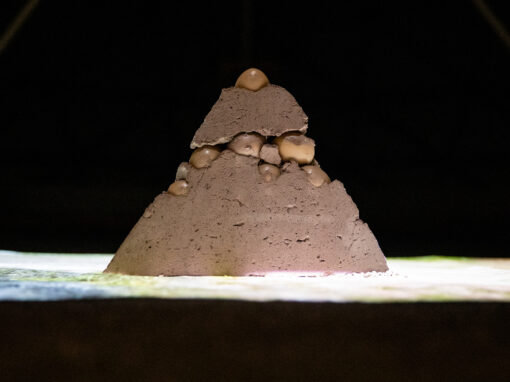
Em Buraco Branco, projeto uma foto da gata Leni em uma tela branca de formato anamórfico no fundo de um buraco. Em uma tentativa de apagar e enterrar a projeção, pinto o quadro com carvão preto triturado, que retém para si boa parte da luz, apagando parcialmente a aparição do corpo da felina. Ao tensionar carvão/luz, tento incorporar na obra o tempo, remetendo a algo que acontece e está acontecendo, a causa e efeito, em uma relação de performance. Aqui, o projetor não está escondido, mais que isso, ele é evidenciado, suportado por três pernas de ferro, no topo da pirâmide, constituindo assim, com o buraco, um circuito de filmagem/projeção, aparição de corpo e materialização de túmulo. O vídeo é devolvido para o buraco durante a exposição do trabalho, tornando a cova mais funda.
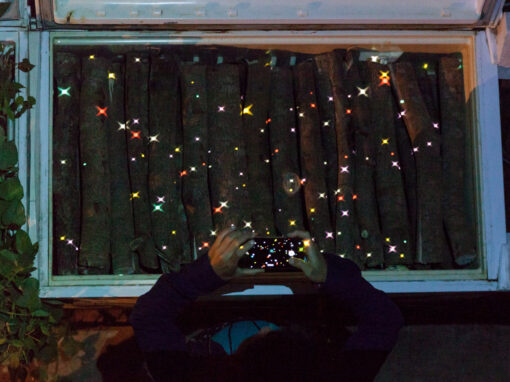
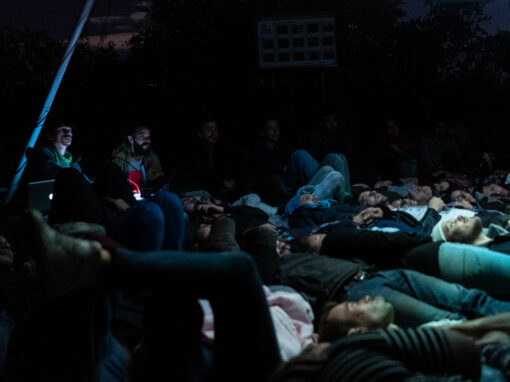
Buraco Branco foi gravado em uma trilha ecológica por onde passam ciclistas, pedestres, mas também grileiros, que erguem suas casas da noite para o dia. O buraco cavado para a gravação do vídeo permaneceu ali para ser reativado em um mês na primeira experiência de apresentar obras do projeto Pirâmide, Urubu no formato de trilha noturna, na ocasião da defesa da dissertação em 2016. Ao retornar ao local poucos dias antes do evento, o buraco estava fechado e a caixa de parafina utilizada para gravar o vídeo Corpo, Continente estava no fundo, debaixo de toda a terra. Uma casa nova foi erguida a poucos metros e o morador me disse que ele mesmo fechou o buraco. Disse que quando viu que cabia um corpo humano, teve certeza que era para “desovar” alguém. Mas quando viu a caixa cheia de parafina mudou de ideia, teve certeza que era “despacho de macumba”, então fez questão de “desfazer logo aquela amarração”.
In Buraco Branco (White Hole), I project a picture of Leni the cat on an anamorphic white canvas at the bottom of a hole. In an attempt to erase and bury the projection, I paint the canvas with crushed black charcoal, which holds back much of the light, partially erasing the appearance of the feline’s body. By forcing coal/light together, I try to incorporate time into the work, referring to something that happens and that is happening, the cause and effect, in a performance situation. Here the projector is not hidden, but it is highlighted, supported by three iron legs, at the top of the pyramid, creating, with the hole, a filming/projection circuit, body apparition and tomb materialization. The video is returned to the hole during the work presentation, making the pit even deeper.
Buraco Branco (White Hole) was recorded at an ecological trail through which cyclists, walkers, but also land grabbers pass by — those who raise their houses overnight. The hole dug for the video shooting remained there to be reactivated within a month, in the first experience of presenting works from the Pyramid, Urubu project, in the form of a night tour for the essay presentation in 2016. Upon returning to the place a few days before the event, the hole was closed and the paraffin box used to record the video Corpo, continente (Body, Continent) was at the bottom, under the earth. A new house had been built a few meters away and the resident told me that he had closed the hole himself. He said that when he saw that the hole was the size of a human body, he was sure it was to “get rid” of someone. But when he saw the box full of paraffin, he changed his mind, and decided it was obviously “witchcraft”, so he made sure to “undo that witchery”.








![TERRA[CAP]](https://www.mauriciochades.com/wp-content/uploads/2020/07/PirâmideUrubuJanineMoraes65-510x382.jpg)




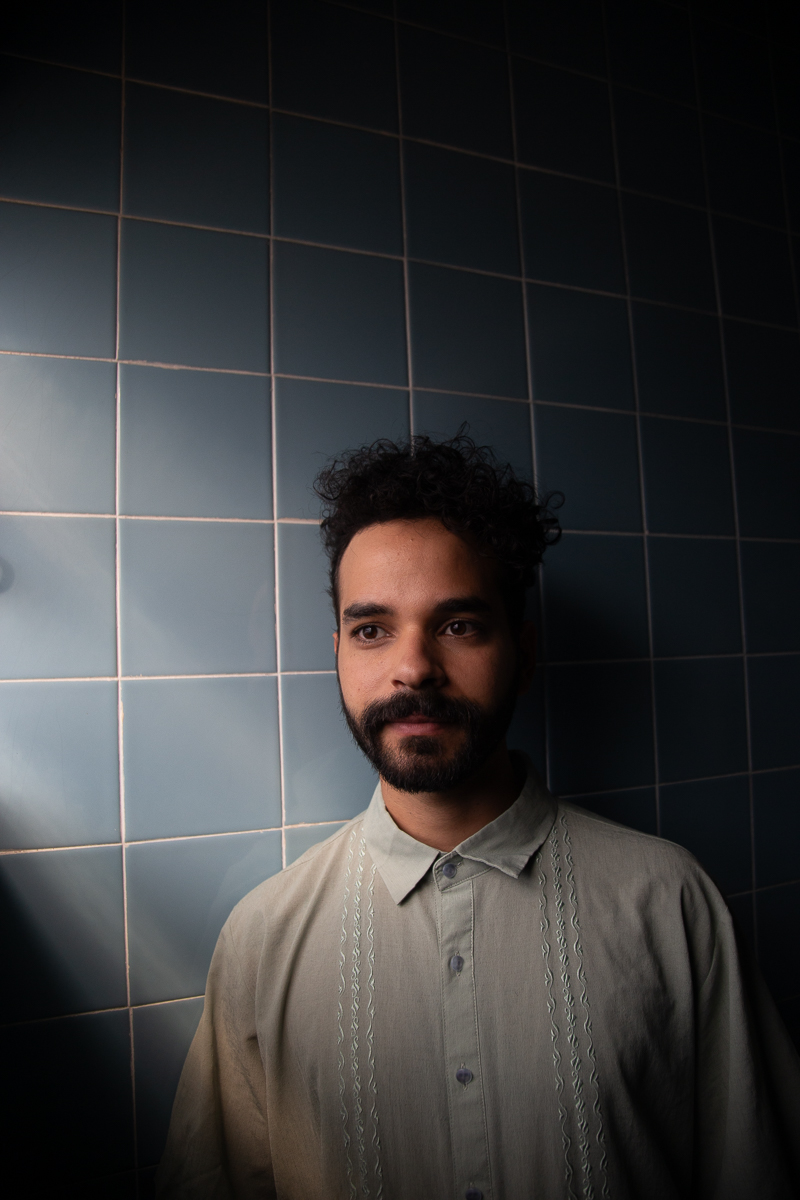
Maurício Chades (Gilbués-PI, 1991) é artista visual e cineasta, com uma prática que transita entre cinema, instalação, escultura e performance. Seu trabalho se desenvolve a partir de relações situadas com diferentes territórios no Brasil, particularmente no Cerrado e na Mata Atlântica, e, mais recentemente, estende-se aos Estados Unidos e ao Canadá. Por meio de ecologias queer, imaginários anticoloniais e formas multiespécies de parentesco, Chades investiga a decomposição, a regeneração e as fronteiras permeáveis entre o humano e o mais-que-humano. Seus projetos frequentemente partem de imersões territoriais prolongadas, colocando em diálogo conhecimentos situados, fabulação crítica e pesquisa ecológica.
Chades é mestre em Arte e Tecnologia pela Universidade de Brasília e possui MFA pela School of the Art Institute of Chicago. Sua produção tem sido exibida internacionalmente em instituições, mostras e festivais como a Bienal Sesc_Videobrasil, o Queer Lisboa e o FILE (Festival Internacional de Linguagem Eletrônica). Sua exposição individual Pirâmide, Urubu (2019) recebeu o Frankenthaler Climate Art Award em 2022, enquanto seus filmes foram reconhecidos pelo e-flux Film Award, pelo Olhar de Cinema e pelo Festival Internacional de Curtas do Rio de Janeiro. Indicado ao Prêmio PIPA em 2024, Chades está atualmente em pós-produção de seu primeiro longa-metragem, COGUM, um eco-horror que explora a decomposição e o luto interrompido como estruturas para repensar o trabalho, a ancestralidade e as relações humanas com a terra.
Maurício Chades (b. 1991, Gilbués, Piauí, Brazil) is a visual artist and filmmaker working across cinema, installation, sculpture, and performance. His work develops through situated engagements with territories in Brazil, particularly in the Cerrado and Atlantic Forest, and extends into the United States and Canada. Through queer ecologies, anticolonial imaginaries, and multispecies forms of kinship, Chades explores decomposition, regeneration, and the permeable boundaries between human and more-than-human life. His projects often emerge from prolonged territorial immersions, bringing situated knowledge, critical fabulation, and ecological research into dialogue.
Chades holds an MFA from the School of the Art Institute of Chicago and an MA in Art and Technology from the University of Brasília. His work has been exhibited internationally at venues and festivals including the Sesc_Videobrasil Biennial, Queer Lisboa, and FILE (Electronic Language International Festival). His solo exhibition Pirâmide, Urubu (2019) received the Frankenthaler Climate Art Award in 2022, while his films have received recognition from the e-flux Film Award, Curitiba International Film Festival, and Rio de Janeiro International Short Film Festival. A 2024 Pipa Prize nominee, he is currently in post-production on his debut feature film, COGUM, an eco-horror exploring decomposition and interrupted grief as frameworks for reimagining labor, ancestry, and human relationships with the land.